The government’s landmark sale of a 65% stake in the state oil pipeline monopoly drew strong institutional demand and a historic strategic investment from Uganda, in a deal poised to reshape Nairobi’s capital markets.
Kenya’s government has successfully completed the largest initial public offering in East African history, selling a 65% stake in Kenya Pipeline Company (KPC) for approximately KSh 106.3 billion (US$824 million). The deal, confirmed as oversubscribed on February 25 by lead adviser Faida Investment Bank, culminates months of preparation and represents the first major state divestiture under President William Ruto’s privatisation programme.
Allocation results are expected today, March 4, 2026, with shares set to be credited to investors’ CDS accounts by March 6. Trading on the Nairobi Securities Exchange is scheduled to commence on March 9, when KPC will begin its life as a publicly listed company on the Main Investment Market Segment.
The Offer at a Glance
The government offered 11.81 billion ordinary shares at a fixed price of KSh 9.00 per share, implying a total equity valuation of approximately KSh 163.6 billion. The offer period opened on January 19, 2026, and was originally scheduled to close on February 19. However, after slower-than-expected retail subscription in the early weeks, the Capital Markets Authority approved a three-day extension to February 24 to encourage wider participation.
The IPO was structured as an Offer for Sale, meaning proceeds flow directly to the National Treasury rather than into KPC’s own coffers. The government has earmarked the funds for priority infrastructure spending in energy, roads, water, irrigation, and airports as part of the 2025/26 fiscal year financing plan.
This was also Kenya’s first fully electronic IPO, with investors able to apply via USSD on their mobile phones or through an online portal, and pay using M-Pesa, bank transfer, or brokerage account balances.
What Is Kenya Pipeline Company?
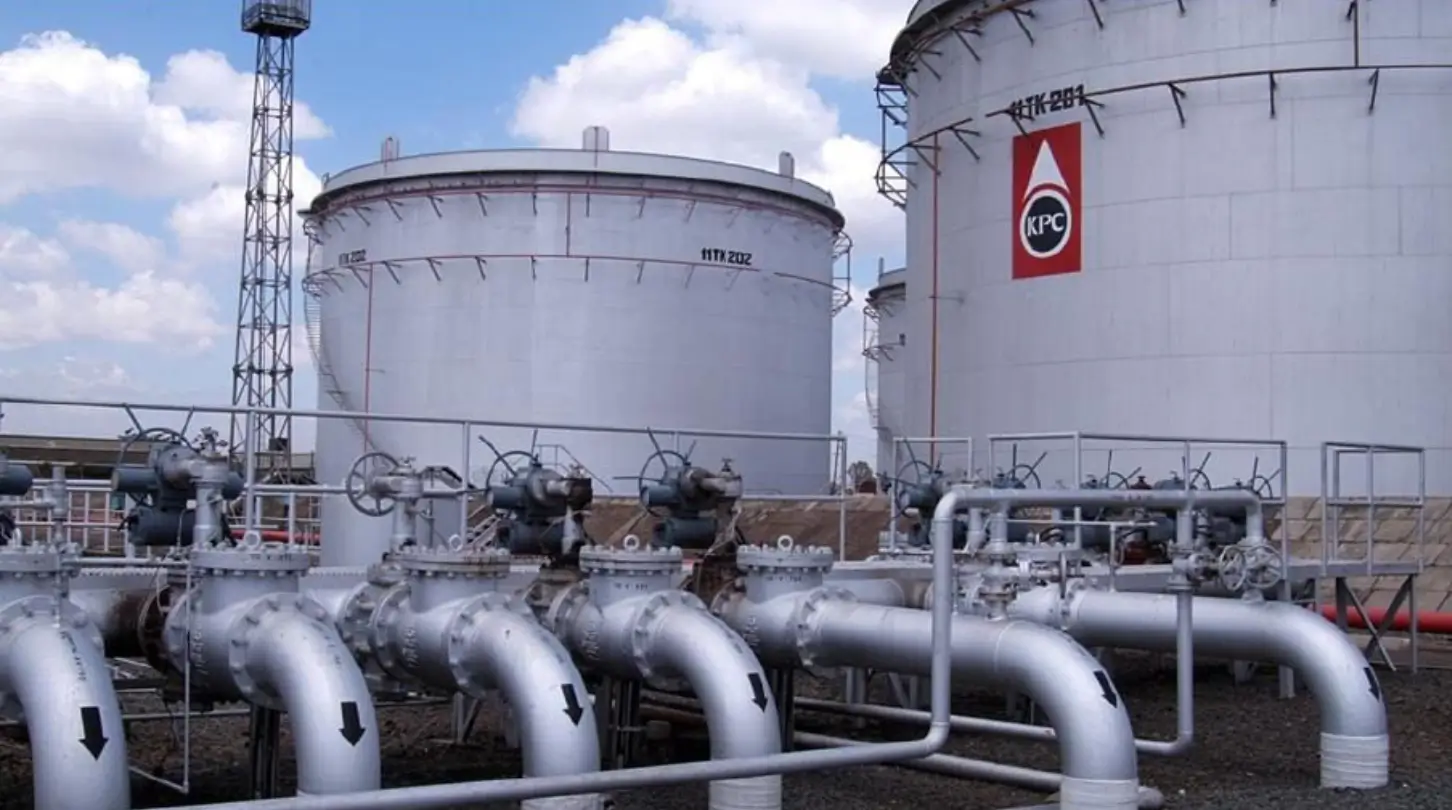
Founded in 1973, Kenya Pipeline Company is the dominant operator of Kenya’s petroleum pipeline and storage infrastructure. The company’s network stretches over 1,300 kilometres from the port of Mombasa into the interior, carrying roughly 91% of the country’s refined petroleum products. For the financial year ended June 30, 2025, KPC reported revenue of KSh 38.6 billion and a net profit of KSh 7.49 billion, with net cash from operations of KSh 14.3 billion. The company operates with EBITDA margins in the mid-40% range, reflecting the infrastructure-like economics of a natural monopoly.
Beyond its core pipeline operations, KPC also runs a 96-core fibre optic cable along the pipeline route, ISO-accredited oil and gas laboratories in five Kenyan cities, and the Morendat Institute of Oil & Gas, a training subsidiary. It also wholly owns Kenya Petroleum Refineries Ltd (KPRL), which is being repositioned within the regional petroleum logistics ecosystem.
Share Allocation Structure
The IPO’s allocation plan was designed to balance broad domestic participation with strategic regional and institutional engagement. Individual Kenyan citizens, Kenyan firms, East African Community investors, and foreign investors were each allocated 20% of the shares on offer. Oil marketing companies — of which 146 are registered in Kenya, with the top ten controlling about 72% of the market — were allocated 15%. KPC employees received the remaining 5%.
While the headline subscription target was ultimately met, the path there was not smooth. Retail participation lagged expectations in the early weeks, prompting the offer extension. It was institutional demand that ultimately carried the day, according to Faida Investment Bank’s lead adviser Belgrad Kenne, who described retail participation as “sizeable” without disclosing specific numbers. The precise breakdown between retail and institutional investors will only become clear when the reconciliation report is published today.
Uganda’s Strategic 20% Stake
One of the most significant outcomes of the IPO was the Ugandan government’s acquisition of a 20.15% shareholding in KPC, representing the largest single foreign allocation. Uganda’s Energy Minister Ruth Nankabirwa explained the rationale at a press briefing on February 24: imports routed through Kenya account for over 95% of Uganda’s monthly fuel demand.
Uganda is a landlocked nation of approximately 50 million people with no coastline and no alternative pipeline corridor. Every litre of petroleum that powers Uganda’s economy passes through KPC’s infrastructure from Mombasa. KPC, for its part, derives about 35% of its revenue from Ugandan throughput. The ownership stake formalises a relationship that was previously entirely one-sided.
Under the revised governance arrangements approved by the CMA, Uganda will gain the right to nominate at least two directors to KPC’s board, provided it maintains a shareholding of at least 20%. Certain reserved matters will now require the affirmative vote of a Ugandan-appointed director alongside a director nominated by the Kenyan government, giving Uganda formal influence over key strategic decisions.
Market Context and Regional Significance
The KPC offering surpasses the 2008 Safaricom IPO as the largest on the Nairobi Securities Exchange in local-currency terms. That earlier deal raised just over KSh 50 billion, though given the weakening of the Kenyan shilling over the intervening 17 years, the Safaricom IPO may still be larger in US dollar terms.
The deal arrives during a period of global recovery in equity capital markets. According to LSEG data, global equity capital markets activity totalled US$738.4 billion in 2025, up 15% year-on-year and the strongest performance in four years. Africa saw six IPOs last year, raising a combined US$882.1 million — 57% more than the previous year and the most since 2018. The KPC IPO also comes amid a notable rally on the Nairobi bourse.
For President Ruto’s administration, burdened by high national debt, limited room to raise taxes, and annual debt repayments consuming roughly 40% of government revenues, the sale of state assets has become a key part of the fiscal strategy. Finance Minister John Mbadi emphasised at the IPO’s launch that the government must turn to innovative financing to fund infrastructure and public services. The government is also separately reducing its stake in telecoms operator Safaricom.
Valuation Questions and Investor Considerations
While the IPO has been hailed as a milestone, it has not been without debate. At the offer price of KSh 9.00 per share, the implied equity valuation of KSh 163.6 billion has drawn scrutiny from independent analysts. Some valuation work based on discounted cash flow analysis and regional infrastructure comparables has suggested a lower intrinsic value range, commonly cited between KSh 4.50 and KSh 5.30 per share.
The company’s investment case rests on its position as a regulated natural monopoly with stable cash flows, a planned 50% dividend payout ratio, and future growth prospects including a proposed pipeline extension from Eldoret to Kampala and onward to Rwanda. However, risks include regulatory and policy exposure, the fact that IPO proceeds do not benefit the company directly, and questions about post-listing liquidity if institutional holders dominate the shareholder register.
Analysts have noted that if pension funds and banks that acquired large positions choose to hold for extended periods, secondary market trading could be thin, potentially undermining price discovery and deterring future institutional participation in Kenyan capital markets.
What Happens Next
Today, March 4, marks the announcement of allocation results. Investors who were oversubscribed will receive a proportional allocation, with refunds and share credits processed by March 6. Final payment on guarantees is due March 5.
Trading commences on March 9, at which point the market will begin to set its own price for one of East Africa’s most strategically vital companies. The early trading sessions will provide the first real signals about whether the pricing was right, whether liquidity is adequate, and whether the rocky path from a slow start to oversubscription was a reflection of temporary market conditions or deeper structural challenges in East Africa’s investor base.
For Kenya’s capital markets, the stakes are high. The success or failure of KPC’s post-listing performance will shape appetite for future privatisations and test whether the Nairobi Securities Exchange can absorb mega-listings of this scale. The entire IPO process is expected to conclude by March 31, 2026.